
Now serving Australian accounting firms
Your back office. Our expertise. Your growth.
CA-led accounting, bookkeeping, payroll, tax and Virtual CFO support across Oman, Australia, the UAE and India.
Email: consult@panaceawfs.com
25+
years combined experience
4
markets
CA-led
engagements
IFRS
aligned

One named team
working inside your systems
One firm. Four tax regimes.
Oman CIT · UAE VAT & Corporate Tax · Australian ATO · India GST
Choose your path
Built for businesses and for accounting practices.
For businesses
Outsource your finance function
Bookkeeping, payroll, tax, reporting and Virtual CFO support for SMEs and growing businesses in Oman, the UAE, Australia and India.
For accounting firms
Add an offshore team to your practice
Dedicated, project-based or white-label support for Australian accounting and bookkeeping practices, including BAS and SMSF work.
About Panacea WFS
Your trusted back-office partner
Panacea Wayfinder Fiscap Services delivers specialised back-office financial functions (accounting, bookkeeping, payroll, tax and reporting) to businesses that deserve expert support without the overhead of an in-house finance team.
Our leadership team has built careers across GCC institutions and Big Four-affiliated firms. We bring that institutional quality to every client, regardless of their size.
Care
Every client is a long-term partner, not a transaction.
Trust
Transparent, ethical advice, always.
Courage
Honest advice, even when it is difficult.
Stewardship
Long-term thinking for sustainable outcomes.
What we do
Everything your finance back-office needs, in one team.
01
Accounting & Bookkeeping
Accurate, reliable financial records: the foundation of sound business decisions.
02
Management Reporting
Tailored performance metrics and concise reports that give a clear, benchmarked picture of your business.
03
Taxation & Compliance
Tax and compliance across all our jurisdictions, simplified and on time.
04
Financial Planning & Virtual CFO
Senior-level financial leadership for startups and established businesses, without the full-time cost.
05
Year-End Accounting
A seamless year-end close, whether your books are up to date or you face a year-end crunch.
06
Payroll Management
End-to-end payroll for international businesses: timely, accurate and compliant.
Leadership
A senior team of Chartered Accountants and finance professionals with 25+ years’ combined experience.
Every engagement is led and reviewed by an appropriate team matrix in line with the engagement’s demands.
25+ yrs
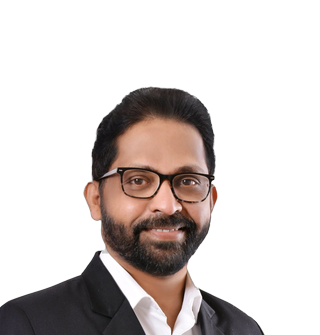
CA. Sebastian Perumbancheel Devassia
CEO & Co-Founder
CA
A Chartered Accountant and co-founder of the firm, he leads business solutions and advisory. His career spans audit practice in India and Abu Dhabi, finance management in the dairy sector, and senior finance roles in Oman’s electricity sector. At the electricity holding company he prepared IFRS group accounts and sector-wide budgets, and as Deputy Finance Manager of a state electricity company he oversaw budgeting, capital project funding, MIS and audit coordination. Since co-founding the practice in Oman, he has led fixed asset verification, inventory counts, receivables reconciliations and accounting support for hospitality, power and water, and government clients. He brings deep experience in Oracle ERP, MIS and IFRS reporting.
23+ yrs
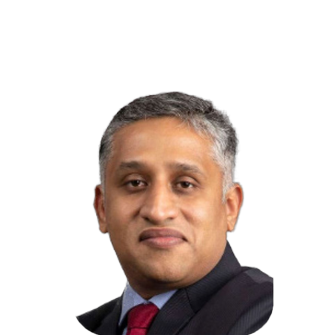
CA. Dilip George Vailiparampil
Chief Consulting Officer & Co-Founder
CA · CIMA · DISA · DipIFRS
A Chartered Accountant with further qualifications in management accounting, IFRS and information systems audit, Dilip leads the corporate finance and consulting department. He spent well over a decade with a regulated electricity distribution company in Oman, rising from treasury to head of budgeting and corporate finance and serving as acting Senior Manager Finance. There he led the company’s long-term fund raising through syndicated loans and an award-winning sukuk, the first in Oman’s electricity sector, met global investors at an international emerging markets credit conference, led the OPEX team for a regulatory price control review and developed the company’s first ESG framework. He now runs his own practice, advising clients on corporate finance, funding, budgeting and regulatory matters. His earlier roles span audit practice, US tax and accounting outsourcing, internal audit, banking and logistics.
25+ yrs
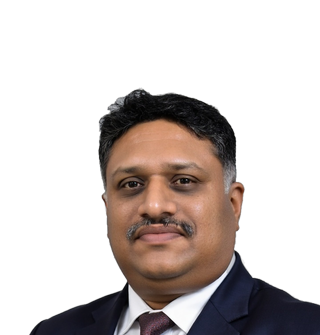
CA. Anoop George Vailiparampil
Chief Business Manager & Co-Founder
FCA
A Fellow Chartered Accountant trained at a Deloitte member firm, Anoop leads audit, taxation, valuations and due diligence. He spent more than a decade in senior finance roles at Oman’s electricity holding group, rising to Budget & Finance Manager and Group MIS & Analysis Manager. He led group budgeting and planning, negotiated long-term bank funding, reviewed subsidiary performance and internal controls, and was functional lead for the group’s Oracle ERP implementation. During the sector’s restructuring, he unbundled the ministry’s accounts into the new electricity companies, preparing their opening trial balances and fixed asset registers. Since co-founding the practice in Oman, he has led fixed asset verification for hotel portfolios, receivables reconciliations, internal audit reviews, business valuations and acquisition due diligence.
12+ yrs
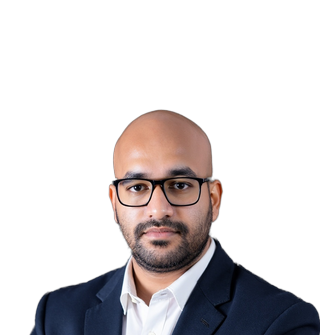
Vaisakh Prakash
Director, Project Management
B.Com (Hons) · ACCA
A finance professional with a B.Com (Hons) from Delhi University and ACCA, Vaisakh leads financial modelling, business planning, feasibility studies and internal audit engagements. He prepares multi-year business plans and board-ready financial packs for regulated utilities, reviews client budget models for IFRS and formula gaps, and has built multi-entity IFRS reporting models for a listed oil marketing group. His internal audit work covers CAPEX, procurement, revenue leakage, HR, IT assets and governance, and he has written internal audit charters and finance, procurement and HR manuals. He has also led large-scale fixed asset reconciliations for government-owned hotels in Oracle ERP. Earlier, he managed statutory and internal audits in India for public sector undertakings and private companies.
How it works
From first call to steady state in four steps.
01
Free consultation
Email us at consult@panaceawfs.com and a senior advisor will learn how your business or practice works and what you need.
02
Tailored proposal
We recommend the right engagement model, scope and fee: fixed or hourly.
03
Onboarding & pilot
We set up access, checklists and reporting formats, then run a pilot or parallel period.
04
Ongoing delivery
Every engagement is led and reviewed by an appropriate team matrix in line with the engagement’s demands, including Chartered Accountants where necessary.
We work in the software you already use
Oracle ERP
Xero
QuickBooks
Zoho Books
Odoo
Tally
Busy
Security & confidentiality
Your data stays protected.
- Access limited to your named team
- We work with the credentials you provide
- Encrypted data handling and strict privacy practices
- Confidentiality obligations on every engagement
FAQs
Questions we often hear
Who reviews and lodges the work?
Every engagement is led and reviewed by an appropriate team matrix in line with the engagement’s demands, including Chartered Accountants where necessary. For Australian clients, final sign-off and lodgement of BAS and tax returns remain with you or your registered agent.
Will you work in our existing software?
Yes. We work inside your preferred accounting and practice platforms, such as Xero, QuickBooks or Zoho Books, so your data stays in your own systems.
How do you keep our data secure?
Access is limited to your named team and uses the credentials you provide. We use encryption and follow strict data privacy practices, and every engagement is covered by confidentiality obligations.
Which markets do you support?
Oman and the wider GCC, the UAE, Australia and India.
How is pricing set?
Most clients choose a fixed monthly fee for a defined scope; project and hourly options are also available. We quote after a free consultation, once we understand your volumes and requirements.
How quickly can we start?
Onboarding usually takes a few weeks: we agree workflows, set up access and run a short pilot or parallel period before full go-live.